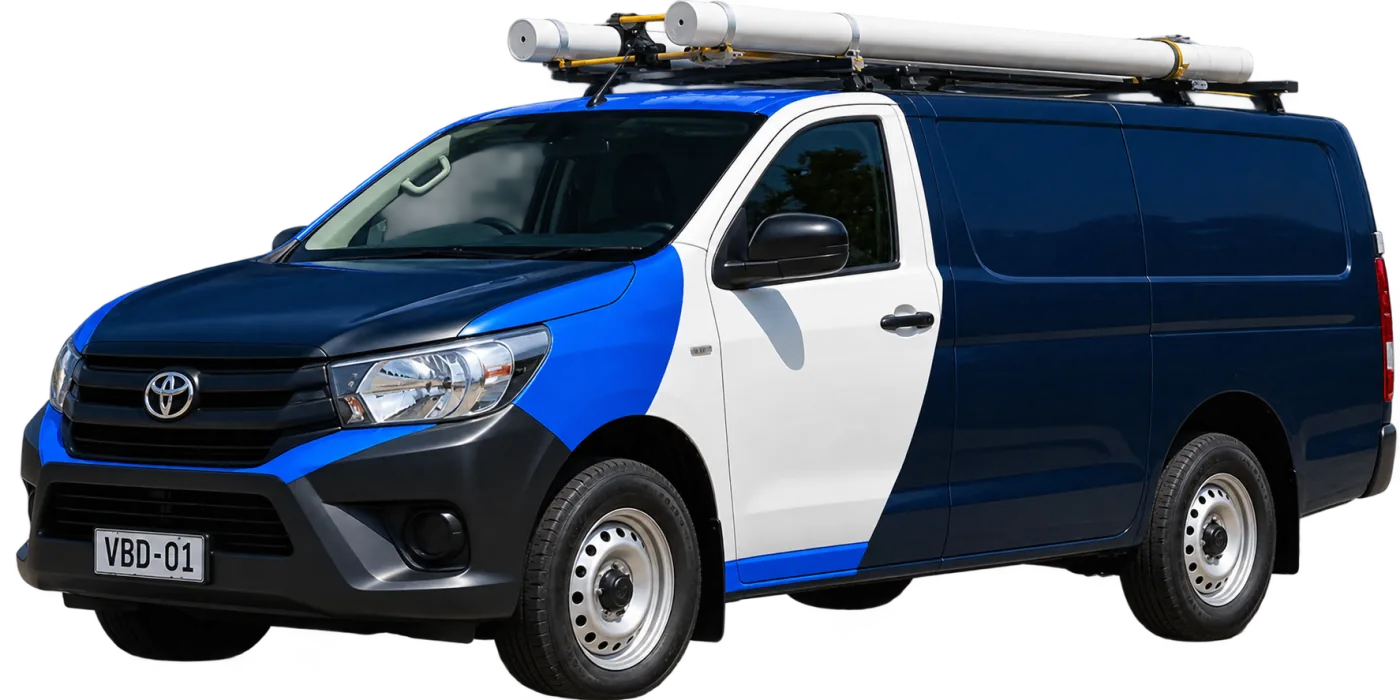
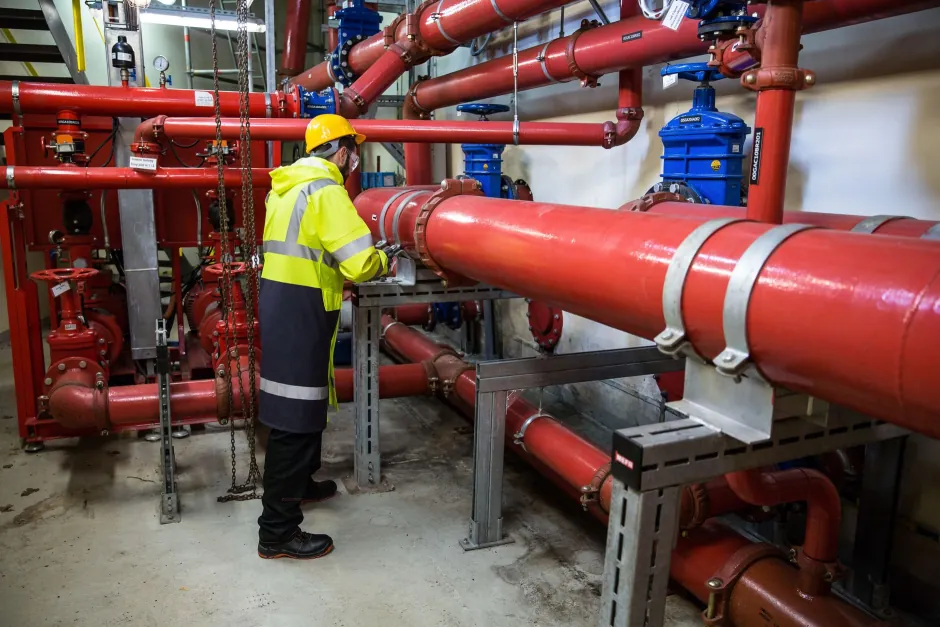
Located with acoustic and pressure equipment before anything is opened. On ground with this much rock in it, the number of holes is the number that matters.
Online Now!·--:--
On most ground, leak detection is sold as a convenience. It saves some mess and some guesswork, and the saving is real but modest.
On this ground the arithmetic is different, because Prospect sits over Sydney's largest body of igneous rock. The expensive part of a leak repair is not the fitting, it is the excavation, and what an excavation costs here depends on how deep it goes before it stops being easy.
So three exploratory holes instead of one is not a slightly worse day. It can be several times the cost, and every one of those holes has the same risk of turning into a different job partway down.
Which makes locating precisely the cheapest line on the invoice rather than the one to skip. Acoustic and pressure testing break no ground at all, and only once we know where it is does anything get opened.


Still moving means water is escaping. On clay it may never appear at the surface, so the meter is a far better witness than your eyes.
Unlike sand, heavy clay does not soak escaping water away. It travels along whatever path is easiest instead, often beside the pipe or under paving.
So it can run a long way before surfacing anywhere, and frequently never surfaces at all.
Water introduced into clay makes it swell, and clay that dries out shrinks. Either way the surface above moves.
A paver that has lifted, or a slab crack that keeps reopening, can be moisture underneath reporting itself. It can also be seasonal, and the meter separates them.
Shut every tap and appliance, then watch the meter for fifteen minutes. Movement with nothing running means water is leaving the system.
It is free, it takes a quarter of an hour, and on this ground it is far more reliable than anything visible.
Because the cost of the job is set by how many holes are opened and how deep each one goes before the ground stops cooperating.
Turning three exploratory holes into one targeted one is usually the largest saving available in the whole job.
Where a failure sits under a driveway or a slab, going around can genuinely cost less here than going through it.
We price both rather than assuming the obvious route is the cheaper one, because on this ground it often is not.
Agreed in writing before work starts. These are indicative 2026 ranges. On this ground the detection line is what keeps the excavation line small.
Isolated and stopped, any hour, before anything else is discussed.
Acoustic, pressure and correlation to a point. The line that saves the most here.
Once located. Depth and ground conditions move this more than the pipe does.
Cheap, inside the house, and the one plumbing job with no excavation risk at all.
Where it was, what caused it, and whether the ground around it needs attention.

On a burst that comes first, before cause or cost is discussed at all.

Acoustic and pressure testing to a point, because here every hole carries its own risk.

One targeted excavation, with what happens if rock turns up shallow already priced in.

Pressure tested before the ground goes back, and the surface reinstated properly.
Shut it off at the meter if you can reach it, then ring. A licensed plumber answers at any hour and can be on the way immediately.
Call 1300 381 569
Because on this ground the expensive part of a leak job is not the repair, it is the excavation, and the excavation cost is set by how many holes get opened and how deep they go. Prospect sits over Sydney's largest body of igneous rock, so a hole that goes deeper than expected can become a genuinely different piece of work. Locating precisely turns three exploratory holes into one, and on flat sedimentary ground that saving is modest. Here it is usually the largest number in the job.
Easily, and heavy clay is part of why. Clay does not absorb and disperse water the way sand does, so escaping water tends to travel along whatever path is easiest rather than soaking in and appearing above. It can run a long way beside a pipe or under paving before it surfaces anywhere, if it ever does. The reliable test is the meter: shut every tap and appliance and watch it for fifteen minutes.
It can be, and on clay it is worth taking seriously in both directions. Water introduced into heavy clay makes it swell, and clay that has dried out shrinks. Either way the ground moves, and a paver that has risen or a slab crack that keeps reopening can be the surface reporting on moisture underneath. It can also just be seasonal. The meter test separates those two cheaply.
Acoustic equipment listens for escaping water through the ground, pressure testing isolates which line has lost integrity, and correlation narrows it to a point rather than an area. None of it breaks ground. Only when we know where it is does anything get opened, once, and on this ground that sequence is worth considerably more than it sounds.
Then locating precisely matters even more, and there is often an alternative worth pricing. Depending on where the failure is, rerouting a line rather than breaking through can be cheaper here than it would be elsewhere, precisely because breaking through is expensive. We price both rather than assuming the obvious answer is the cheap one.
They are among the most common causes of serious water damage in Australian homes and they have a service life of about five to ten years. When one goes it releases mains pressure continuously until somebody reaches the stop tap. Replacing them is cheap and it is entirely inside the house, which on this ground makes it one of the few plumbing jobs with no excavation risk at all.
An emergency make-safe is $250 to $500. Leak detection is $300 to $600, and here it is the line that saves the most rather than the one to skip. Repair once located is $400 to $1,200 for most jobs, with depth and ground conditions moving that more than the pipe does. A flexible hose replacement is $150 to $350.
Tell us what made you suspect it, and whether anything has moved in the paving or a slab. On clay that is one of the few visible clues you get.
Located with equipment before anything is opened, and the excavation priced with the ground accounted for rather than assumed.
Online Now!·--:--